 ESPEC North America, Inc. (Corporate office)
4141 Central Parkway
Hudsonville, MI 49426 USA ESPEC North America, Inc. (Colorado/Qualmark office)
12600 E. Smith Road
Aurora, CO 80011 USA
303-254-8800

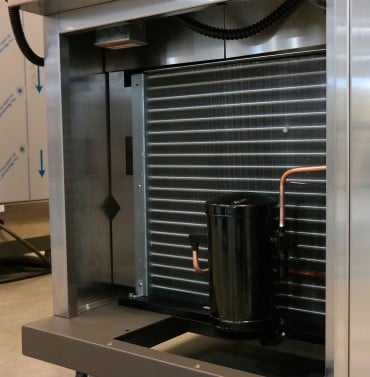 Why do our larger test chambers need cooling water? The water is used to cool the refrigeration system at its condenser (where the refrigerant changes from a gas to a liquid). Our smaller, standard chambers can do this by expelling the heat directly to the room via an air cooled condenser (similar to a refrigerator). But because the larger compressors used with our high performance systems would create too much heat and noise, water cooling is preferred. Cooling water can be from any source, but the following basic requirements are needed:
Because the quantity of water required may be too expensive to draw from a city water system, some customers select external cooling systems that re-circulate the water. This is especially beneficial when more than one system is involved, as one cooler can handle multiple systems. There are two types of coolers:
Either system may use ethylene glycol (anti-freeze) mixed with the water to extend the temperature range of the cooling loop, mostly to avoid freezing. The use of anti-freeze makes the cooling less efficient, which means a higher overall flow rate is required. All ESPEC water cooled systems include a water regulating valve that only allows as much water as is required to maintain the outlet water temperatureof 35°C (95°F). The GPM (gallons per minute) value ESPEC specifies is a maximum flow rate. More at Wikipedia: Chillers, Cooling towers
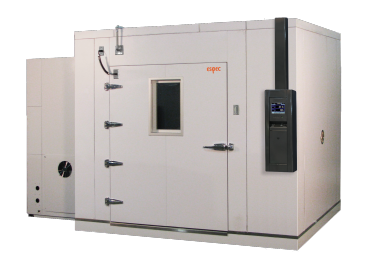
Standard and custom walk-in rooms deliver the temperature or humidity testing performance you need:
ESPEC North America, Inc. (Corporate office)